The Clerical College
The Advanced Day Division
History and System of the Division:
At its session on July 2, 1953, the General Lay Council approved a memorandum by Mr. Counselor Ishaq Abdel-Sayed concerning the establishment of the Advanced Day Division at the Clerical College, beginning with the academic year 1953–1954. Admission would be restricted to holders of the Tawjihiyya Certificate (Secondary School Certificate), who would pursue full-time studies at the university-college level. Its headquarters would be temporarily located in the Anba Reweis Building until a building for a dedicated theological college could be constructed.
The Clerical College Administration Committee met and coordinated the curricula after studying the curricula previously submitted by the late Professor Archdeacon Habib Girgis, the curriculum submitted by Professor Dr. Guirguis Sobhy, and the curricula of the most renowned foreign theological colleges.
The committee decided that physical education would be compulsory and that time would be allocated every day for meditation, individual prayers, and communal prayers. A morning Divine Liturgy would also be celebrated for the students, and trips to monasteries and other places would be organized…
Teaching Staff:
Some of the university’s senior professors were appointed to teach, namely:
- Professor Dr. Sami Gabra: Former Director of the Institute of Egyptian Antiquities, to teach the History of Religions.
- Professor Dr. Murad Kamel: Professor of Semitic Languages at Cairo University and Director of the Institute of Languages, to teach Semitic Studies.
- Professor Dr. Aziz Suryal Atiya: Professor of Medieval History at Alexandria University, and former professor at approximately twenty universities in Europe and America, to teach Church History.
- Professor Dr. Guirguis Sobhy: To teach Coptic Literature.
- Professor Burmester: Lecturer in Greek at Alexandria University and a specialist in Coptic Studies, to teach the History of Rites and the English Language.
- Professor Yassa Abdel-Messih: Curator of the Coptic Museum and lecturer at Ibrahim University, to teach the Greek Language.
- Dr. Maher Kamel: Ph.D. from the Department of Philosophy at Cairo University, to teach Education and Psychology.
As for the religious and theological sciences, they were entrusted to their professors at the Clerical College, namely:
- Father Ibrahim Attia: Dean of the Clerical College, to teach Dogmatic and Theoretical Theology.
- Father Tawadros Tadros: To teach the Coptic Language.
- Father Solaib Suryal: To teach the Rites of the Old Testament and Legal Culture.
- Father Makari El-Souriani: To teach Social Service.
- Father Mankarios Awad Allah: To teach Bible Studies – Old Testament.
- Deacon Sadeq Atta Allah: To teach Hymnology.
- Mr. Botros Shehata: To teach Biblical Interpretation.
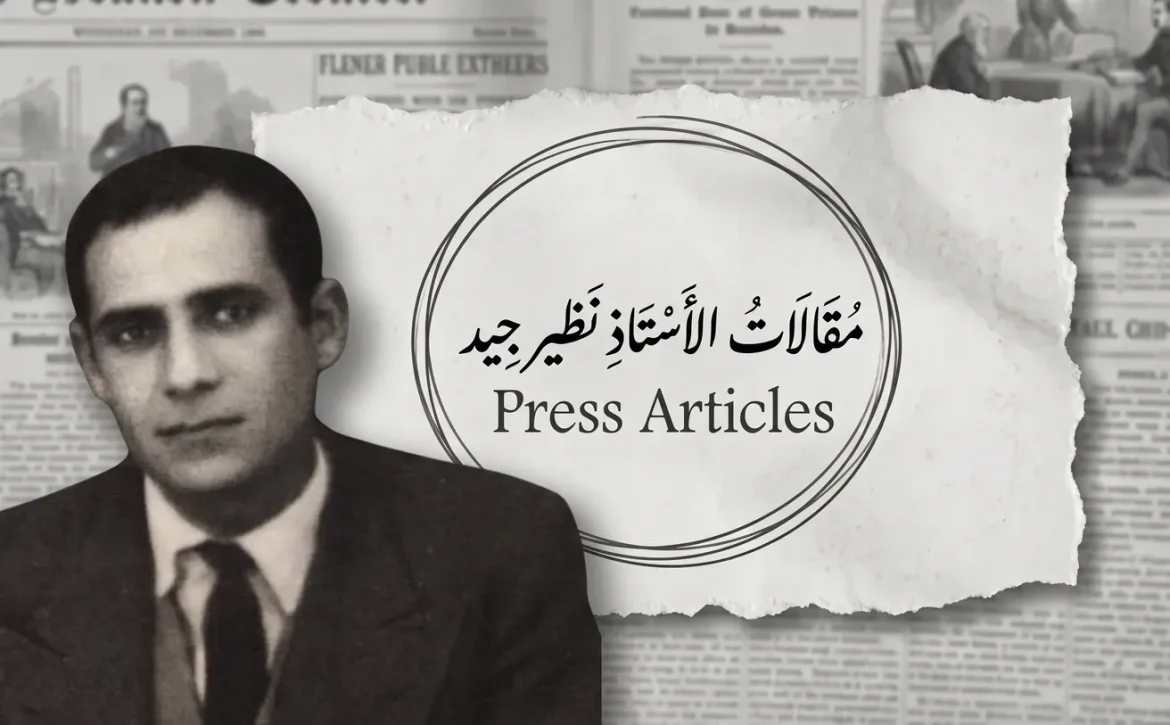
- Mr. Nazir Gayed: To teach Bible Studies – New Testament.
- Mr. Riyad Suryal: To teach the Arabic Language and Literature.
- Mr. Tawfiq Zaki: To teach Physical Education.
This Advanced Division is awaiting our teacher, Anagnostis Wahib Atta Allah, Vice-Dean of the Clerical College, following his return, God willing, from his successful studies in England, so that he may resume the significant role he plays in building up the Clerical College. We hope this magazine will convey to him our collective greetings and best wishes.
The division began its studies on October 26. May it be under God’s care.
The University Evening Division
Its studies begin on November 3 for holders of higher university degrees. Classes are held in the evening, three days a week. Studies also take place in the building of the Clerical College at the Anba Reweis grounds.
Anba Reweis Hall
The General Lay Council is preparing to inaugurate the cultural season at Anba Reweis Hall in early November. Mr. Counselor Iskandar Qasabgi has been entrusted with supervising the film program, while Mr. Farag Gibran has been entrusted with preparing the cultural program and lectures.
On this occasion, we recall that many Sunday School servants had held several meetings during the previous summer through three committees: a cultural committee, a social committee, and a sports committee. These meetings had been called by the distinguished Mr. Azmi Nawar, who was then Director of the Coptic Schools, and they had indeed succeeded in preparing carefully studied programs.
They would be greatly pleased to hear that the lecture season is about to begin, and even more pleased to participate in it. They sincerely hope that the lectures to be delivered will provide a new field for building up souls, particularly those of young people, and guiding them toward the noblest goals and purposes.
They also hope that these lectures will provide an opportunity to address our problems and present our aspirations. They should encompass studies of our Coptic civilization and its foundations; the philosophy of our ecclesiastical teachings, their characteristics, systems, scholars, and saints.
In this way, they will lead to the revival of a new spirit among the people, connecting their present with their past and enabling them, with renewed awareness, to look toward the ideal life and a better future through the grace of God.
For better translation support, please contact the center.