


13Oct2026
  • Sanan Pasha Street – El Zeitoun – Cairo
  • [email protected]
TwitterFacebook-fYoutubeSpotifySoundcloud
logotype
  • Home
  • Index
    • Video Index
    • Audio Index
      • Other Miscellaneous Topics
    • Articles Index
    • Books Index
  • Encyclopedias
  • Video Lectures
  • Audio Lectures
  • E-Books
  • Photo albums
  • العربية

Type To Search

Contact Us
  • Home
  • Index
    • Video Index
    • Audio Index
      • Other Miscellaneous Topics
    • Articles Index
    • Books Index
  • Encyclopedias
  • Video Lectures
  • Audio Lectures
  • E-Books
  • Photo albums
  • العربية
logotype

Type To Search

logotype
  • Home
  • Index
    • Video Index
    • Audio Index
      • Other Miscellaneous Topics
    • Articles Index
    • Books Index
  • Encyclopedias
  • Video Lectures
  • Audio Lectures
  • E-Books
  • Photo albums
  • العربية
Who is Melchizedek?
Home All Categories Encyclopedias Encyclopedia of the Holy Bible Old Testament Persons of the Old Testament Who is Melchizedek?
Persons of the Old Testament
By t.keraya5 December 19900 Comments

Who is Melchizedek?

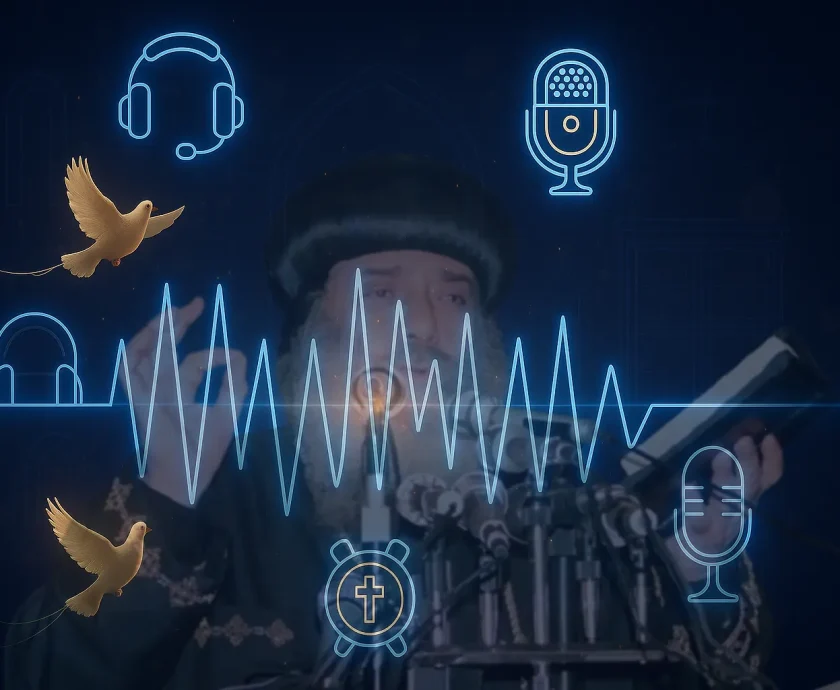
popeshenoda podcast

متصفحك لا يدعم تشغيل الصوتيات.

⬇️ تحميل المحاضرة

In this lecture His Holiness Pope Shenouda explains the Coptic Orthodox Church’s stance on the figure Melchizedek as mentioned in Genesis and the Epistle to the Hebrews. He affirms that Melchizedek is a real historical person — a king and priest of the city Salem — and that his description in the Old Testament is used symbolically to demonstrate the greater priesthood of Christ without making him an incarnation of the Lord Himself.

Core points

  • The Scripture records that Melchizedek offered bread and wine and blessed Abraham, and that Abraham gave him tithes, which indicates he was a recognized priest and king with an actual historical role.
  • In the Epistle to the Hebrews, Paul uses Melchizedek as an example to prove that Christ’s priesthood is not from Aaron’s lineage but a higher priesthood not dependent on hereditary genealogies.
  • The Hebrew text does not say “he is the Son of God” but rather “like the Son of God”: the distinction between Christ being of the order of Melchizedek and Melchizedek being Christ is clear and important.
  • One cannot deduce from Melchizedek’s offering of bread and wine that the sacrament of the Eucharist was instituted in Abraham’s time; the Church cautions against such a direct reading.
  • The textual indications and the manner of the appearance show that Melchizedek appeared to a real person (Abraham) and did not present himself as God; rather he blessed Abraham saying, “Blessed are you from God Most High,” which linguistically distinguishes him from a divine manifestation.

Theological interpretation

The phrase “without father, without mother, without genealogy in the priesthood” in Hebrews should be understood in the context of priesthood: Melchizedek’s priesthood was not hereditary as was Aaron’s. This makes him a type of Christ’s eternal non-hereditary priesthood, not evidence of his personal eternality or divinity.

Spiritual and educational application

The speaker urges clarity between symbols and historical persons: accepting Melchizedek as a real person does not negate his typological relation to Christ, while at the same time we must avoid turning typology into doctrines that confuse Creator and creature. From his names — “King of Righteousness” and “King of Peace” — we can draw Christian virtues to aspire to in God’s kingdom: righteousness, holiness, and peace.

For better translation support, please contact the center.
Audio Section Melchizedek The Bread and the Wine The King The Priesthood

Attributes of God - Unlimited

21 October 1997

Perpetual Virginity of the Blessed Virgin Mary - Disputes with Protestants

21 March 1989

منشورات ذات صلة

Persons of the Old Testament
13 May 1992

Christ’s relationship with his disciples

By Mounir Malak
عظات قداسة البابا شنوده الثالث
Persons of the Old Testament
2 November 1994

Nehemiah the Prophet

By t.keraya

Leave a Reply Cancel reply

Your email address will not be published. Required fields are marked *

Archive by Date
الاقسام
Related Topics
  • Samuel the Prophet – Part 2
    Samuel the Prophet – Part 2
    17 December 1997
  • Christ’s relationship with his disciples
    13 May 1992
  • David the Prophet – Part 4: The Mistakes of David.
    David the Prophet – Part 4: The Mistakes of David.
    30 March 1994
Tags
Al-Ahram Newspaper Al Keraza Magazine Audio Section Baptism Church Discernment Divinity Education Eternity Faith Fasting Forgiveness giving Grace Holiness Holy Spirit Hope Humility Incarnation Knowledge Love Marriage Martyrdom Mercy Monasticism Obedience Peace Prayer Preaching Priesthood Purity Redemption Repentance Responsibility Resurrection Salvation Service Sin spirituality Steadfastness Teaching Unity Video Section Watani Newspaper Wisdom
Categories
  • All Categories(82)
  • Anger(1)
  • Atheism(4)
  • Attributes of God(82)
  • Beginning of the New Year(6)
  • Calmness(1)
  • Canons of the Ecumenical Councils(4)
  • Canons of the Fathers (Apostles and Patriarchs)(7)
  • Christian Concepts(10)
  • Christian Conduct(7)
  • Christianity in Egypt(1)
  • Church Occasions(3)
  • Church Organizations(38)
  • Church Penalties(17)
  • Commentary on the New Testament(112)
  • Commentary on the Old Testament(44)
  • Concepts(138)
  • Deacons and Deaconesses(16)
  • Differences with the Catholics(28)
  • Differences with the Protestants(48)
  • Doctrinal Issues(6)
  • E-books(1)
  • Encyclopedia of Ascetic Theology(7)
  • Encyclopedia of Barthology(27)
  • Encyclopedia of Canon Law (Legislative Theology)(43)
  • Encyclopedia of Church History(72)
  • Encyclopedia of Comparative Theology(193)
  • Encyclopedia of Dogmatic Theology(17)
  • Encyclopedia of Dogmatic Theology(98)
  • Encyclopedia of Eschatology(36)
  • Encyclopedia of Feasts and Occasions(150)
  • Encyclopedia of Liturgical Theology(35)
  • Encyclopedia of Moral Theology(124)
  • Encyclopedia of Pastoral Theology(119)
  • Encyclopedia of Spiritual Theology(516)
  • Encyclopedia of the Holy Bible(189)
  • Encyclopedia of the Saints’ Lives(108)
  • Faith(3)
  • Famous Christians in the Islamic Eras(1)
  • Famous Fathers in the Early Centuries(5)
  • Feast of the Epiphany(11)
  • Feast of the Nativity(17)
  • Feast of the Resurrection(9)
  • Feasts of the Saints(4)
  • General Introduction to Church History(1)
  • God’s Providence(37)
  • Heresies and Heretical Doctrines(1)
  • Historical Events(6)
  • Historical Verification(2)
  • History of Heresies and Schisms in the Early Centuries(6)
  • History of the Coptic Church and Its Martyrs(3)
  • Hope(6)
  • Ibn al-‘Assal’s Canonical Collection(6)
  • Jehovah’s Witnesses(12)
  • Judgment(2)
  • Life Experiences(2)
  • Life of Saint Mark the Apostle(3)
  • Life of Stillness(3)
  • Liturgies(5)
  • Lives of the Anchorite Fathers(15)
  • Lives of the Martyrs and Confessors(6)
  • Love(6)
  • Meekness and Humility(5)
  • Meetings, Seminars, and Conferences(9)
  • Milestones of the Spiritual Journey(10)
  • Modern Heresies(45)
  • Monasticism(6)
  • Monasticism(8)
  • New Testament(6)
  • Old Testament(28)
  • Others, Miscellaneous and Various Topics(112)
  • Our Apostolic Fathers(8)
  • Pelagianism and Original Sin(2)
  • Personal Status(35)
  • Persons of the New Testament(6)
  • Persons of the Old Testament(64)
  • Poems, Hymns, and Songs(96)
  • Priestly Service(220)
  • Questions(30)
  • Questions and Answers(23)
  • Redemption(5)
  • Repentance – Self-Examination(1)
  • Saints of Virginity and Monasticism(4)
  • Salvation(3)
  • Seventh-day Adventists(11)
  • Some Categories of Pastoral Care(212)
  • Some Fields of Pastoral Care(81)
  • Spirits(3)
  • Spiritual Theology – Virtues(21)
  • Spiritual Topics – New Testament(10)
  • Spiritual Topics – Old Testament(3)
  • Spiritual Warfare(24)
  • The Altar(2)
  • The Angels(6)
  • The Armenians(1)
  • The Beginning of the Christian Church(2)
  • The Church(27)
  • The Church after Chalcedon(1)
  • The Church after the Schism – The Middle Ages(2)
  • The Church before the Schism(5)
  • The Church in the Diaspora(1)
  • The Church of Alexandria and Its Patriarchs(7)
  • The Conscience and the Influencing Factors(7)
  • The Early Church(6)
  • The Fourth Century and Its Importance(7)
  • The Holy Trinity(14)
  • The Human(11)
  • The Incarnation(6)
  • The Lord’s Feasts(1)
  • The Self(2)
  • The Spiritual Man(14)
  • The Theology of the Holy Spirit(5)
  • The Virgin Mary, Mother of God(21)
  • Video(1)
  • Virtues (Moral Theology)(2)
  • Wars of Thought(1)