

Pope Cyril the Great 375–444 AD
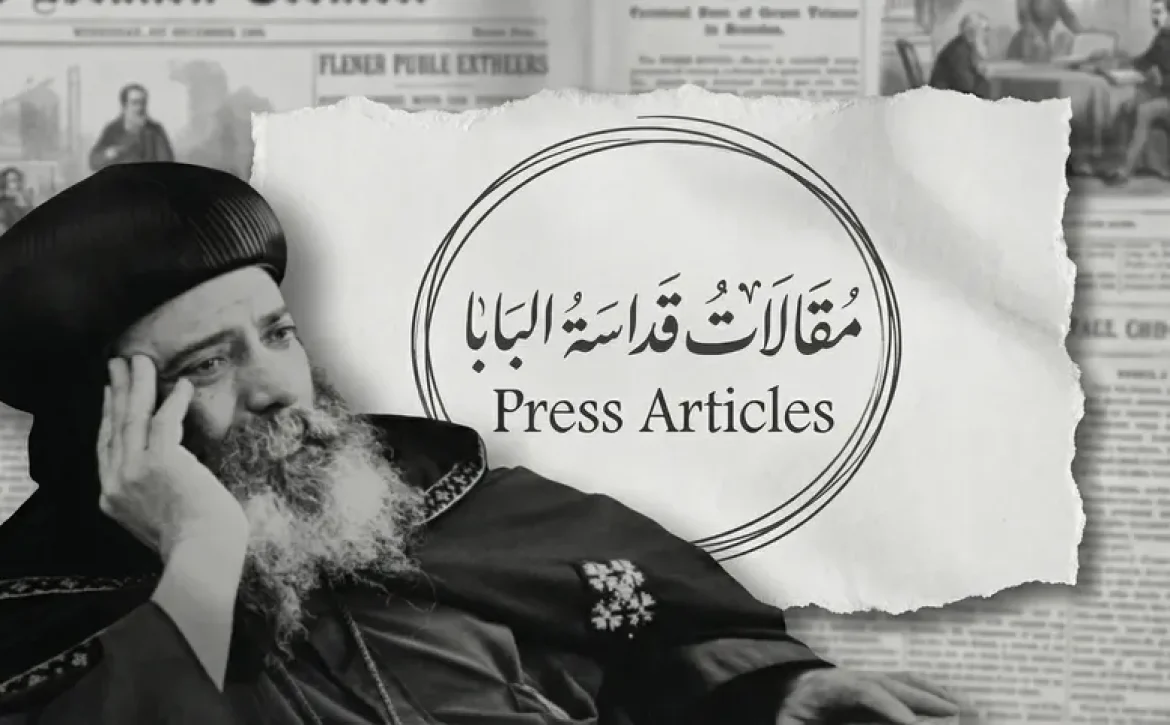
Pope Cyril the Great 375–444 AD
On the 3rd of Abib, the Church celebrates the commemoration of a great saint among the Popes of Alexandria, considered one of the greatest theologians in the entire history of Christianity:
Saint Cyril of Alexandria, or Cyril I, or Cyril the Pillar of Faith, the 24th Pope. He trained in the wilderness, and Pope Theophilus, his uncle, saw in him exceptional intelligence, so he made him his secretary, then he became his successor. He sat on the See of Saint Mark in the year 412 AD and departed in the year 444 AD. He presided over the Ecumenical Council of Ephesus, and he took with him to this council fifty of his bishops, as well as Saint Abba Shenouda the Archimandrite, and Saint Abba Baktor, head of the monasteries of Abba Pachomius at that time, which indicates that he was keen, in theological matters, to receive the blessing of the Fathers of the wilderness.
Saint Cyril is the one who confronted the heresy of Nestorius, Patriarch of Constantinople, condemned it, and anathematized Nestorius. He laid the foundation of the Christian faith concerning the nature of Christ and gave the Virgin the title Theotokos. He is also known for his famous expression “One Nature of the Incarnate Word,” which was the subject of study in 1971 in Vienna between the Orthodox and the Catholics. Saint Cyril endured much for the sake of the faith until he became one of its champions, and his name was placed beside that of Saint Athanasius at the peak of theological scholars. He authored the Cyrilian Liturgy, which our Church uses in some fasts.
The numerous works Saint Cyril the Great left to us in Greek include commentaries on both the Old and New Testaments, as well as works on doctrine and theology, in addition to his homilies and letters.
His Works:
-
In the Interpretation of Scripture:
Saint Cyril almost interpreted most of the books of the Old and New Testaments. Among the most important are Worship in Spirit and Truth and his book on the Torah Glapbyra. But not all his writings have survived for us, and translations from Greek are few. His interpretation of the Old Testament has an allegorical character, while his interpretation of the New Testament is literal.
Among his most beautiful legacies is his commentary on the Gospel of John, which reveals the strength of his theological writing. He also left us 156 homilies on the Gospel of Luke. We also still have his commentary on the Book of Isaiah, on the Minor Prophets, and fragments from many other commentaries. -
In Doctrine and Theology:
He wrote books against the Arians concerning the Holy Trinity and the divinity of Christ in two long studies. He also composed writings against Nestorianism, including the Twelve Anathemas, five books against the heresy of Nestorius, defenses of the faith, and speeches delivered at the council. He also wrote books on the Incarnation and on the priesthood.
His Homilies and Letters:
He wrote 29 pastoral letters on the occasion of the Feast of Pascha, and around 88 letters, most of which involve theological topics.
Our Duty Toward Saint Cyril:
We must teach our children about his history, greatness, and theological ideas. And if we can translate some of his writings, this would be very beneficial.
A work about him titled Cyrilliana was published some years ago. A church was built in his name in Alexandria, and books about his life were issued.
For better translation support, please contact the center.
