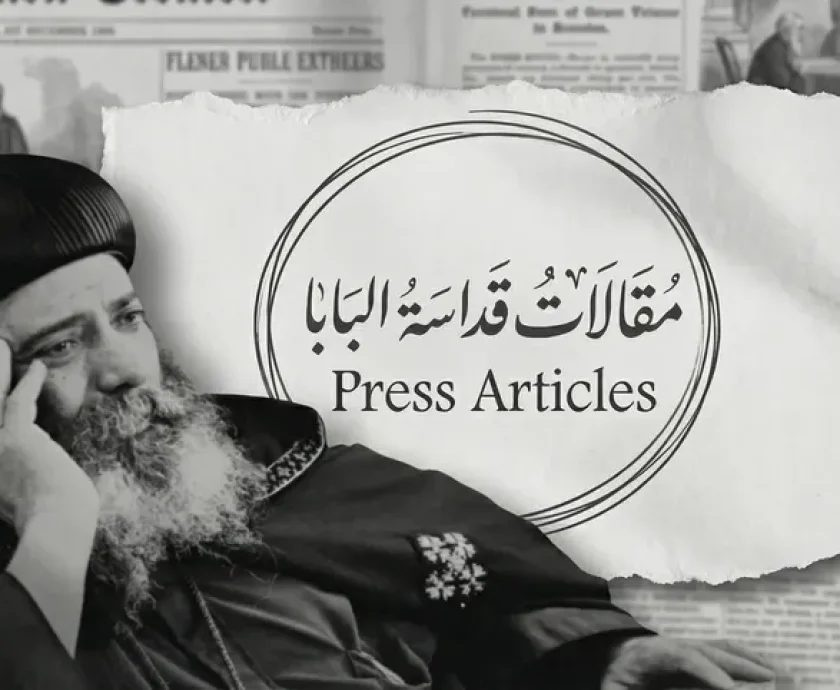
Habib Girgis
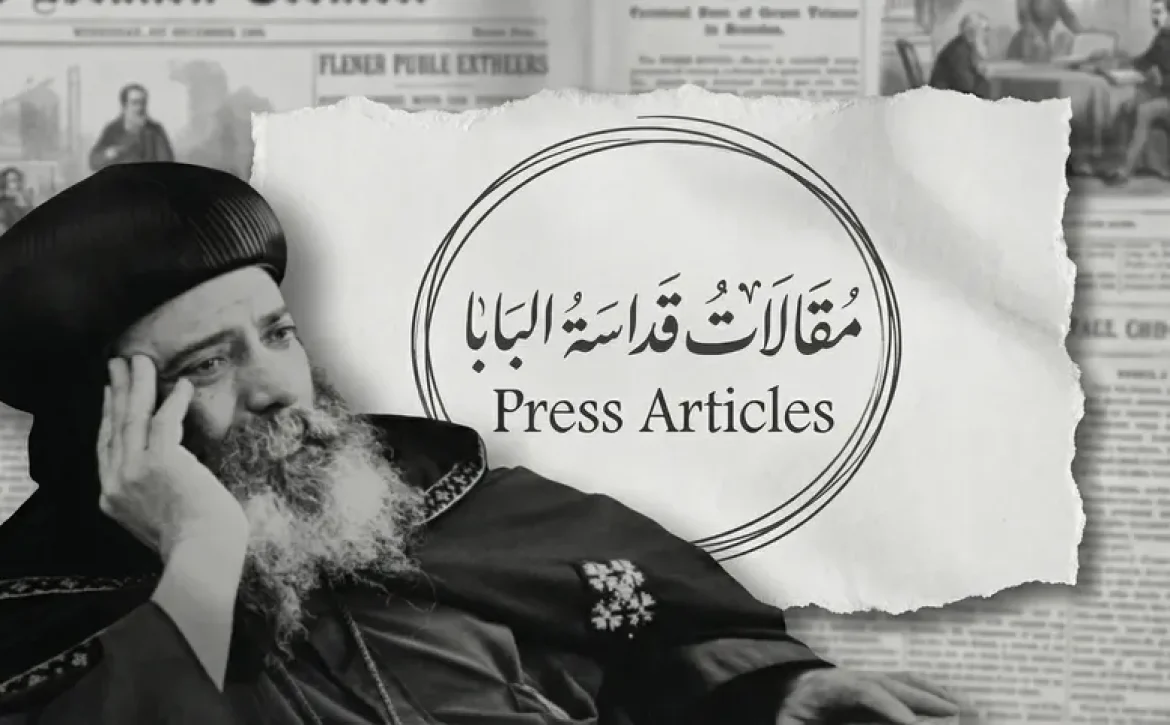
On this page, dear reader, we will meet you in every issue of the magazine to tell you about one of the preachers. We would like to begin with our modern era, in appreciation of those who served us in it, so that no one may think that preaching has ceased for centuries…
And the first preacher of this generation is undoubtedly:
Habib Girgis
The era in which he grew up was almost completely devoid of education. When the Theological Seminary (Clerical College) was opened, they could not find a teacher of religion, so the students remained for more than three years without studying it. There were no preachers, and various sects had begun to infiltrate the Church.
“The earth was without form and void, and darkness was upon the face of the deep… then God said, ‘Let there be light,’ and there was light.” That light was Habib Girgis. He began as a dim light, then soon blazed brightly and filled all the preaching service with radiance.
He was the first student to enroll in the Theological Seminary. Eleven others joined with him, but only one remained. Finding no one to teach him religion, he threw himself into the Patriarchate Library, devouring knowledge from its books. He was guided by the scholar Archpriest Philotheos Ibrahim, who was elderly and frail in those days. When appointed to teach at the Seminary, the priest managed only two weeks of teaching before collapsing and being carried home, never to return again.
Habib Girgis was appointed a teacher of religion at the Seminary while still a final-year student. There was no specialization in theological sciences at that time, so he taught everything until he himself later established such specialization by training teachers for all branches of theology.
Habib Girgis believed in positive action. He did not waste his time or effort criticizing the weaknesses of his era but instead began to work and build. He dug the foundation and laid two cornerstone institutions — the Theological Seminary and the Sunday Schools. The structure continued to grow as he prayed, “Let Your people, O Lord, be blessed — thousands upon thousands, and ten thousands upon ten thousands — doing Your will.”
He traveled through all the regions of the preaching ministry, preaching and spreading the light everywhere. From among his students, he produced hundreds of preachers and evangelists. He personally collected the donations that funded the Theological Seminary and established endowments to sustain it. He also built a school for chanters to train deacons for the Church.
Habib Girgis did not stop at teaching, preaching, and founding institutes — he was also a prolific author. He wrote spiritual books such as The Secret of Piety, Spiritual Contemplations, The Consolation of the Faithful, and The Spirit of Supplication. He also wrote theological works such as Summary of the Doctrinal Foundations, The Orthodox Rock, and The Seven Sacraments of the Church. In the field of liturgy, he published The Holy Euchologion and three hymnbooks. He took upon himself the task of preparing religious education textbooks for schools at all levels, authoring The Orthodox Christian Principles (8 volumes) and The Most Precious Treasure in the Sacred History (3 volumes).
He also worked in the field of publishing, releasing books such as The Ladder of Heaven, Barlaam and Yosaphat, and the lives of Saints Anthony and Paul. He was an active member of the Coptic History Committee and participated in writing The Book of St. Mark, as well as a book about the Theological Seminary. In the field of reform, he wrote a valuable and constructive book titled Practical Means for Coptic Reforms. He was also active in journalism and founded Al-Karma Magazine, which gained a prominent position among Coptic periodicals and continued for 17 years.
Habib Girgis was a deeply spiritual man, pure in speech, gentle in heart, and characterized by genuine fatherly love. He encouraged workers with all his strength and made their paths easier. He was loved by all. He earned the trust of His Holiness Pope Cyril V, serving as his personal deacon, as well as the trust of his successors, and enjoyed the love and support of all the bishops and metropolitans of the Church. At the same time, he was an active member of the General Coptic Community Council, often receiving the highest number of votes during elections.
With such love, trust, dedication, and gentle spirit, he worked on his constructive mission without ever hurting anyone’s feelings. At his memorial service, the following was said:
“O strong one in whose nature there was no weakness,
And gentle one in whose being there was no harshness.
O wise one who disciplined people — in his rebuke was love,
And in his voice was compassion.
Your manner was pure and noble,
Your tongue chaste, your words clean and sincere.”
-
Article by His Grace Bishop Shenouda, Bishop of Education – Al-Keraza Magazine, Year 1, Issue 1, January 1965
For better translation support, please contact the center.