Saint Anba Abram, Bishop of Fayoum
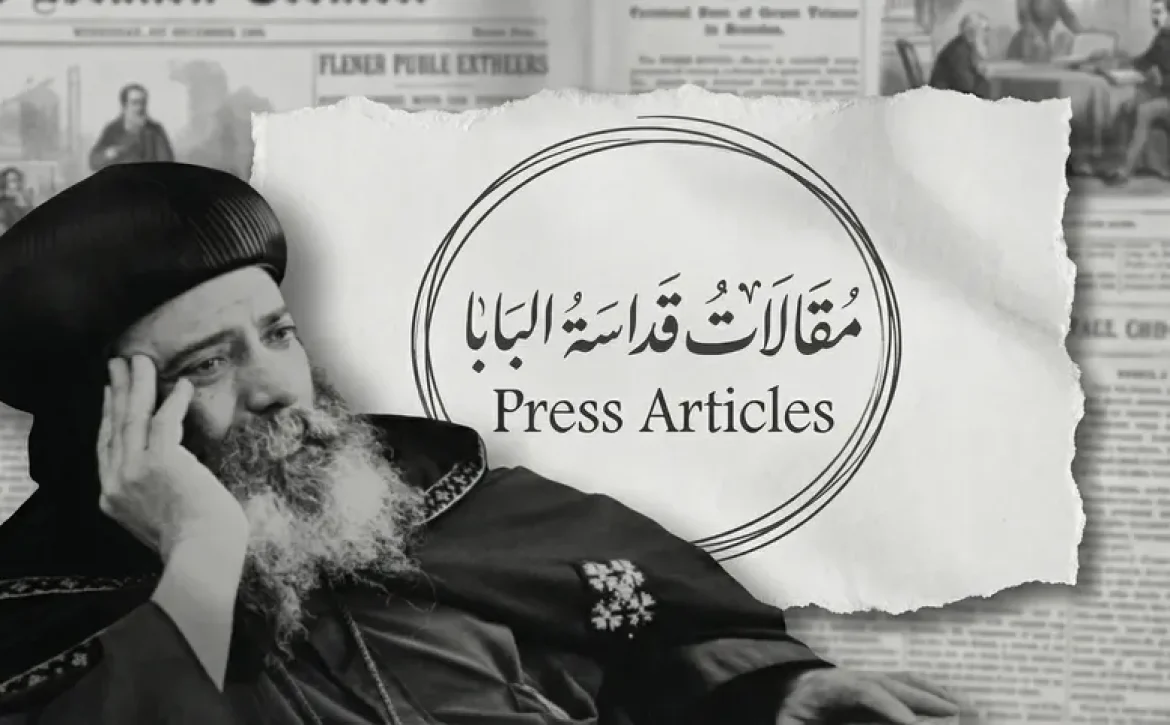
Saint Anba Abram, Bishop of Fayoum
A poured-out fragrance is the biography of this saint, and a sweet incense whose scent God has inhaled… He is a spirit—were it not united with a body, we would have said it is one of the appearances of angels to people…
My mouth is sanctified when it utters the name of Anba Abram, and my pen is blessed when I write about him… and my soul humbles itself before him, continuing to diminish and grow small until it realizes that it is nothing.
A beautiful biography, as though our generation has borrowed it from the ages of the early Fathers. Or it is holiness that is not confined by a specific time or place, nor hindered by obstacles of hardships or tribulations.
It is a wonderful image of the man of God—how he cleaves to Him and lives ideally, whether in the world or in the wilderness, in leadership or in submission, in contemplation or in service or in both together… It is an image of the holy bishop: calm, humble, meek, loved by all, revered by all—not for rank or authority, but for his angelic conduct… the ascetic, poor, simple bishop who knew no name for money except that it is a right for the poor. It is the image of the bishop who rules on earth with authority from heaven, acknowledged by all, and whom God supports with wonders.
✝ ✝ ✝
This great saint was raised in Delga, then became a monk in the Monastery of al-Muharraq under the name of the monk بولس الدلجاوي, and he was appointed head of the monastery. He used to spend generously on the poor, so they removed him from the leadership of the monastery. He then resorted to the flourishing Monastery of al-Baramous during the time of the headship of القمص يوحنا الناسخ, who admired him.
When يوحنا الناسخ became Patriarch under the name البابا كيرلس الخامس, he ordained the monk بولس الدلجاوي as Bishop of Fayoum under the name Anba Abram. He excelled in works of mercy. Therefore, God added to him the gift of healing and casting out demons to complete the work of mercy toward people.
Many churches have been built in his name, some of them in the Diocese of Dairut, and the latest of them in Beit Al-Mahabba, for which القس مرقس شحاتة was ordained as a priest.