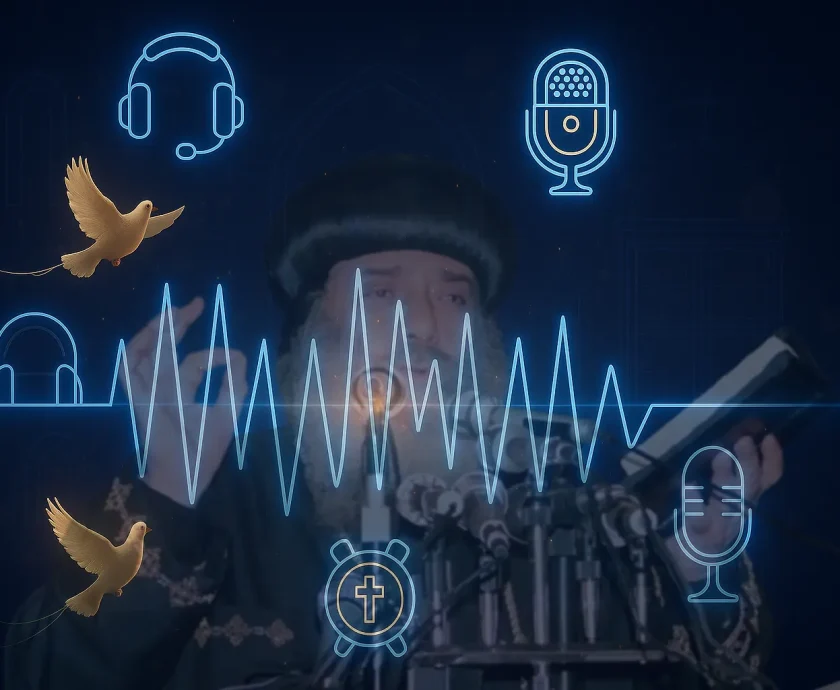
The Priest and the Practice of Rituals

The lecture emphasizes that church ritual is not merely a set of movements or memorized words, but a deep spiritual practice whose effectiveness depends on the priest’s spirituality, reverence, and understanding of what he prays and performs. The priest is a mediator between God and the people, and every movement, prayer, and word he offers leaves a direct impact on the believers.
First: The Spirituality of the Ritual and Its Effect
- The spirituality of performing the ritual leaves a profound effect on the souls of the attendees, even without a spoken sermon.
- Prayer that comes from the heart influences people more than words or teaching alone.
- The priest’s movements—such as prostration, kneeling, lifting hands, and standing before the altar—are all rituals with spiritual meaning that affect the congregation.
Second: The Priest’s Responsibility in Spiritual Practice
- If the priest lacks spirituality in his practices, this spiritual dryness will be transmitted to the people.
- Reverence, holy fear, and careful attention to every movement before the altar are essential in priestly service.
- Even the way the sign of the cross is made or incense is offered must be done in a spirit of prayer, not mechanically.
Third: Prayer with Understanding and Depth
- Fast or incomprehensible prayer loses its spiritual essence.
- The priest is required to pray with understanding of every word and its meaning, offering it to God from the depth of his heart.
- The Prayer of Preparation before the Liturgy is the foundation of humility and contrition that carries the priest through the rest of the service.
Fourth: The Priest as a Representative of God and the People
- During the Liturgy, the priest prays not only for himself but for the entire congregation.
- He faithfully carries the people’s requests and lifts them up to God, just as the high priest carried the names of the tribes upon his chest.
- The secret prayers and petitions said during the Liturgy must be offered with awareness, focus, and heartfelt presence.
Fifth: Ritual and Teaching
- The spirituality of ritual must extend to the pulpit and teaching, so that people feel that God Himself is speaking.
- The Gospel is part of prayer; it is a dialogue between God and humanity, with the priest serving as the mediator.
- Every ritual and every movement carries a symbolic and spiritual meaning and should never be practiced without inner prayer and understanding.
Conclusion
Church ritual is a complete spiritual life. The spiritual priest is the one who understands his responsibility, prays, and practices the rituals with reverence, understanding, and depth, thus leading the people into true prayer and communion with God.
For better translation support, please contact the center.