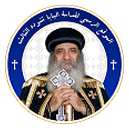
His Holiness Pope Shenouda III’s remarks on his pastoral visit abroad
His Holiness Pope Shenouda III speaks about the long pastoral journey he undertook to Australia, Canada, the United States of America, and England, explaining its importance in visiting and caring for the members of the Coptic Orthodox Church in the diaspora. This visit was historical because he visited many regions and churches for the first time, and some of these countries had never previously been visited by any Pope of Alexandria. His Holiness explains that the primary purpose of pastoral visits is not merely traveling or attending celebrations and receptions, but understanding the people’s conditions firsthand, ensuring their spiritual and ecclesiastical well-being, and studying their actual needs. Pastoral visitation is an important means that helps the Church provide appropriate care for its members and follow the growth and expansion of its churches.
Spiritual Message
His Holiness emphasizes the importance of genuine faith and trusting in God in all ecclesiastical works. He explains this through the story of purchasing buildings for church service in Birmingham, England, where the financial resources were initially limited, but through faith, work, and trust in God’s care, things that initially seemed difficult were accomplished. He explains that a believing person does not depend only on human strength, intelligence, or personal effort, but trusts that God is the true worker and waits to see the wonders of His work. He also stresses the importance of love, care, and patience in dealing with family and spiritual problems. He mentions that many marital disputes that had reached difficult stages ended in reconciliation and the families’ return to their lives together.
Educational Lesson
His Holiness explains that one of the most important challenges facing the Coptic Church in the diaspora is the difference in language between generations. Children who were born and raised in these countries speak English and may be unable to understand sermons, lectures, and prayers in Arabic. Therefore, he emphasizes the necessity of giving attention to translation into English, not only for liturgical books, but also for spiritual and historical books, the lives of the saints, doctrine, theology, and liturgical information. He also points out the importance of preparing El-Keraza magazine in English and producing lectures and educational films in this language. He explains that building the Church is not limited to constructing buildings and walls, but requires building the person intellectually and spiritually and establishing them upon sound principles, morals, and proper ecclesiastical teaching. For this reason, he highlights the role of the theological seminary in teaching doctrine, history, rites, and the Holy Bible, and preparing a generation capable of serving the Church and preserving its faith.
Practical Application
His Holiness calls for giving attention to the continuation of churches in the diaspora, rather than merely establishing new churches, through preparing Sunday School curricula in English, training and qualifying servants, and providing books and lectures suitable for the new generations. He also emphasizes the importance of forming committees to follow up on diaspora affairs and paying attention to the administrative organization, laws, and regulations of the churches so that they can continue fulfilling their mission. He encourages preparing translators who are proficient in English to participate in translating books, magazines, and educational materials. At the end of his talk, His Holiness draws attention to the importance of recognizing the spiritual and historical value of Egypt, as a holy land visited by the Lord Jesus Christ, the Virgin Mary, and Saint Joseph the Carpenter, where Christian monasticism originated and where ancient monasteries and churches exist. Thus, he teaches us that serving the Church requires faith and trust in God, continuous pastoral visitation, sound teaching, organized work, and genuine care for future generations.
For better translation support, please contact the center.